
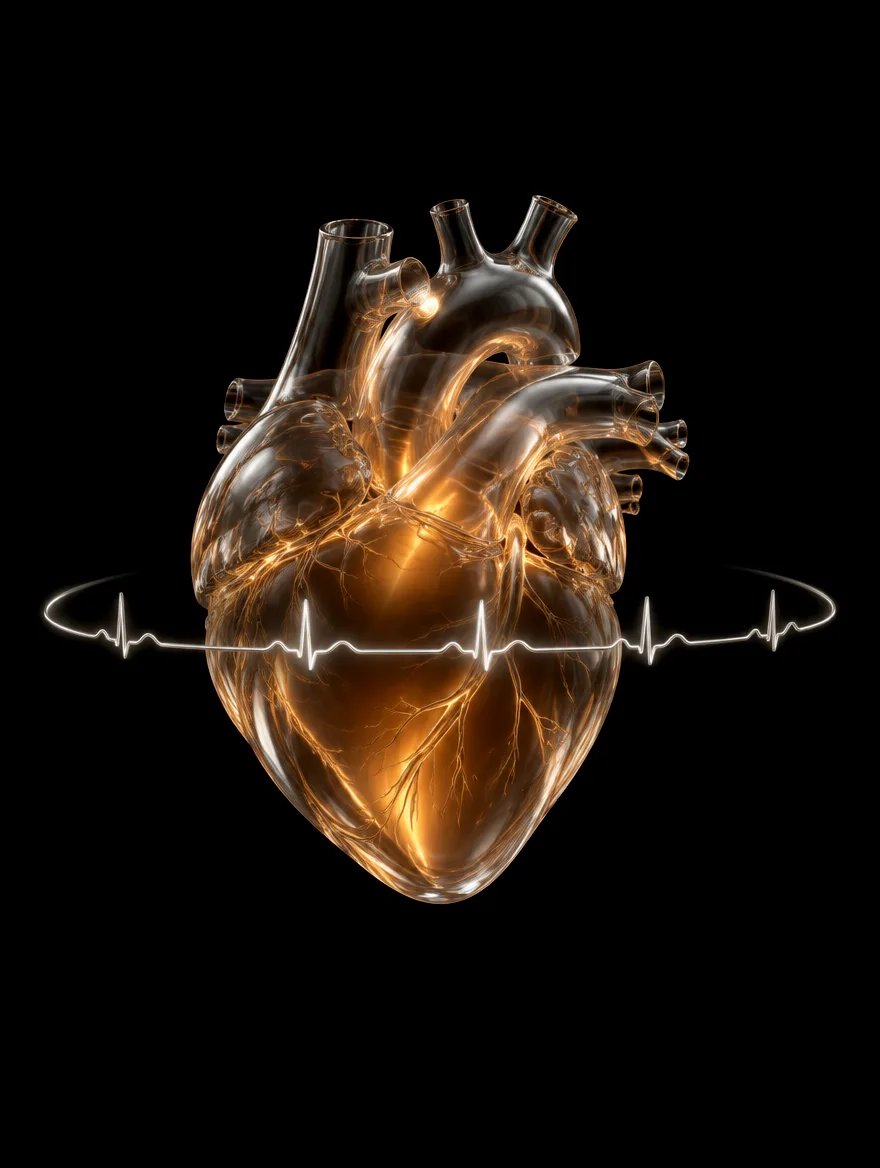
How we protect your heart
Every step below exists because of the heart. None of them is optional, for anyone.
- A 12-lead ECG before you travel. Done with your own doctor or a lab near you, two to four weeks before the retreat, and read by our physician for the QT interval, conduction and rhythm. A long QT, or certain conduction findings, is a no.
- Electrolytes checked. The blood panel includes a full metabolic panel with potassium, and serum magnesium, alongside liver function and more than 110 markers in the full diagnostic. The physician reads them with your ECG before you are cleared.
- Every medication reviewed. Prescriptions, supplements, anything bought online and anything you use recreationally. The physician decides what is compatible, what needs a taper, and what closes the door. Tapers are planned with your prescribing doctor, never alone.
- Checked again on arrival. Blood pressure, heart rate, oxygen and a conversation with the physician on the first day, then vitals every day, including an ECG. Nothing is given on the first day, and a clearance from home does not override a new symptom.
- A physician on site 24/7. Our physician reviews every application, signs the clearance, and stays in the palapa through every ceremony.
- Continuous monitoring during the ceremony. Cardiac telemetry runs all night, with IV access placed before any dose so fluids, magnesium, electrolytes or medication can be given in seconds. Magnesium and electrolytes are given according to the cardiac protocol, preventively and in response to what the monitor shows.
- Emergency readiness. Emergency medication is on hand, transport is ready during every ceremony, and the emergency plan is rehearsed with the nearest hospital, twenty minutes away. The physician can pause or stop further medicine at any moment.
Some applicants are declined or postponed after screening, for many different reasons. The full protocol is on the Safety page and the medical protocol page.
What the risk is, in plain words
Each heartbeat is an electrical wave. After every beat, the heart muscle needs a moment to reset before the next one. On an ECG, that reset shows up as the QT interval. Ibogaine, the main alkaloid in iboga root bark, and noribogaine, which the liver makes from it, slow the reset by blocking a potassium channel in heart cells called hERG. The QT interval gets longer and the pulse often slows. Researchers propose this as the mechanism behind the serious heart events reported with ibogaine (Koenig and Hilber, 2015).
A longer QT is not felt. You notice nothing. The danger is that, past a point, the reset becomes unstable and the heart can slip into a fast, chaotic rhythm called torsades de pointes, which can be fatal. Cardiologists consider a corrected QT (QTc) above about 450 milliseconds in men and 460 in women prolonged, and above 500 milliseconds highly abnormal (Drew et al., 2010). The same scientific statement lists what makes that slip more likely: low potassium, low magnesium, a slow heart rate, heart disease, an inherited long QT that nobody knew about, female sex, and other drugs that also lengthen the QT. Almost all of those can be found before you travel, and several can be corrected.
Timing matters too. Noribogaine stays in the body for one to two days, so the effect on the heart can outlast the most intense part of the night (Koenig and Hilber, 2015). That is why observation continues after the ceremony ends.
What the research shows
- The effect is real and large at high doses. In a supervised Dutch study, fourteen people with opioid dependence were given 10 mg/kg of ibogaine. At its peak, the QTc rose by about 95 milliseconds on average (range 29 to 146; the paper's own table gives 102), half went above 500 milliseconds, and half had a pulse below 60. Eight received IV magnesium when the QTc passed 500. Nobody developed torsades, and the authors described the changes as clinically relevant but reversible (Knuijver et al., 2022).
- The heart is the most common adverse event. A systematic review of human reports from 2015 to 2020 found that most acute adverse events were cardiac, with QTc prolongation the most frequent, and called for screening of vulnerable people (Ona et al., 2022).
- Deaths had causes that screening looks for. In a review of 19 deaths between 1990 and 2008, in 12 of the 14 cases with adequate data, pre-existing illness, mainly cardiovascular, or other drugs explained or contributed to the death (Alper et al., 2012). Read Can iboga kill you?
- Magnesium and monitoring. In the 2024 Stanford study, thirty special operations veterans received IV magnesium before ibogaine and again about twelve hours later, with continuous ECG monitoring. The authors reported no bradycardia, no clinically meaningful QT prolongation and no serious adverse events (Cherian et al., 2024). The QT was judged by eye on the monitor, and no QTc values were published. It was a small open-label study of screened men in a clinic, not proof that magnesium removes the risk, but it is the clearest sign so far of what a careful protocol looks like.
- Outside medical care, the picture is worse. The United Kingdom's National Poisons Information Service logged seven patients over ten years, taking 5 to 34 grams of root bark or tablets bought online, from a dealer or from a shaman. All seven had neurological symptoms and six showed cardiac toxicity, including cardiac arrest, torsades de pointes, QT prolongation and a slow pulse (Edwards et al., 2025). A 2026 review in Addiction concluded that ibogaine should be given only under controlled medical supervision, with CYP2D6 genotyping and close cardiac monitoring (Brunt, 2026).
-
0%
went above a QTc of 500 milliseconds, the level cardiologists call highly abnormal
7 of 14 people, one 10 mg/kg dose in hospital · Knuijver and colleagues, 2022
-
0 ms
average rise in the QT interval at its peak, from one dose
same study; the individual rises ran from 29 to 146 ms
-
0%
of the deaths with enough data to judge were explained, or contributed to, by existing illness (mainly cardiovascular) or other drugs
12 of 14 judgeable cases among 19 deaths, 1990–2008 · Alper and colleagues, 2012
-
0%
attributed heart palpitations, chest pain or chest pressure to the ibogaine they had taken
59 recent users in a US national survey, where use is mostly unsupervised · Simonsson and colleagues, 2026
-
0%
used some form of health care because of it, against 16% of people who took psilocybin
74 people who had taken ibogaine in the past year, same survey
-
0
cases of torsades de pointes in the two studies that screened people first and watched the heart continuously
14 people in a Dutch hospital, 30 screened veterans at Stanford · not proof of safety, but it is what supervision looks like
Screening and monitoring lower the risk. They do not remove it, and we will never tell you otherwise. The numbers from each study, in charts, are below the sources.
Who needs extra care, or cannot come
The physician decides case by case. These are the situations we look for:
- Heart conditions. A long QT interval, significant arrhythmia, heart failure, a recent cardiac event, uncontrolled high blood pressure, or a family history of sudden death or fainting that the ECG cannot rule out. Most of these are a no.
- Medications and supplements that lengthen the QT or slow the clearance of ibogaine. See the next section.
- Low potassium or magnesium. From diuretics, heavy drinking, long diarrhea or vomiting, or weight-loss injections. These are usually correctable, and the retreat waits until they are. Read GLP-1 drugs, retatrutide and iboga.
- Eating disorders with purging, or a very low body weight. Vomiting and starvation drain potassium and magnesium and can lengthen the QT on their own; heart rhythm problems are the main cause of sudden death in eating disorders (Jáuregui-Garrido and Jáuregui-Lobera, 2012). An eating disorder that is not stable is a no for now.
- Recent stimulant use. Cocaine, methamphetamine, Adderall and other stimulants raise heart rate and blood pressure, and other drugs contributed to several of the deaths reviewed. They are stopped before travel, on the date the physician sets. Read How to quit cocaine and How to get off Adderall.
- Methadone and long-acting opioids. Methadone itself carries a boxed warning for life-threatening QT prolongation (FDA label, DailyMed). A switch is planned with your prescriber weeks ahead. Read How to quit opioids.
- Alcohol or benzodiazepine dependence. Withdrawal strains the heart and can cause seizures, so it is tapered or stabilized medically first. Iboga is never given during benzodiazepine withdrawal.
Medications that matter
Two kinds of medication change the picture. The first lengthens the QT on its own, so its effect adds to iboga's: some antidepressants and antipsychotics, methadone, certain antibiotics and antifungals, some anti-nausea and heart rhythm drugs. The standard reference list is kept by CredibleMeds. The second slows the liver enzyme, CYP2D6, that clears ibogaine: in healthy volunteers pretreated with paroxetine, exposure to the active drug roughly doubled (Glue et al., 2015). Fluoxetine and bupropion act on the same enzyme, and so do kratom and some boosted HIV regimens.
Never stop a medication on your own to fit a retreat. Some are dangerous to stop quickly. List everything on the application, and the physician plans any change with the doctor who prescribed it.
What to do before you come
- List everything you take on the application: dose, how often, where it comes from. Supplements, peptides and recreational use count.
- Tell us about your heart and your family's. Fainting, palpitations, chest pain, a relative who died suddenly young. These change what the ECG needs to answer.
- Do the ECG and blood panel two to four weeks before the retreat, after any medication pause, so the results show the body you will bring.
- Eat and drink normally. The weeks before are for building potassium and magnesium, not for fasting, crash diets or extreme training.
- Stop stimulants and alcohol on the dates in your preparation plan, and follow the preparation guidelines.
- Tell the team about any change after clearance: a new prescription, an illness with vomiting or diarrhea, a relapse. A clearance is only as good as what we know.
Questions people ask
Is ibogaine dangerous for the heart?
It can be. Ibogaine lengthens the QT interval in most people who take it, and often slows the pulse. On a screened heart, with normal potassium and magnesium, no interacting drugs and continuous monitoring, that effect is watched and passes. The deaths reported in the literature mostly involved existing heart disease, other drugs or no medical supervision.
Do I need an ECG before iboga?
Yes, always, even if you feel perfectly well. A long QT interval produces no symptoms, and an ECG is the only way to see it. We ask for a 12-lead ECG and a blood panel, reviewed by our physician before you travel, so nobody flies to Mexico to be declined at the door.
Which medications interact with ibogaine?
Anything that lengthens the QT interval, such as methadone, some antidepressants, antipsychotics, antibiotics and antifungals, and anything that blocks the liver enzyme CYP2D6, such as paroxetine, fluoxetine and bupropion. Stimulants, alcohol and benzodiazepine withdrawal also matter. The physician reviews every medication you list and plans any change with your prescriber.
Why do you give magnesium?
Low magnesium makes a long QT more dangerous, and magnesium is the first treatment for torsades. The Stanford veterans study gave it by IV before and after ibogaine. We give magnesium and electrolytes according to the cardiac protocol, preventively and in response to what the monitor and the bloodwork show.
Is the root bark safer for the heart than ibogaine HCl?
No, and we do not claim it is. The root bark contains ibogaine, and the liver turns it into noribogaine just the same. The same screening and the same monitoring apply. Read Iboga vs ibogaine.
How long does the effect on the heart last?
The largest change comes in the hours after the dose, and noribogaine stays in the body for one to two days. In the Dutch study, some participants still had a prolonged QTc at 24 hours. That is why observation continues after the ceremony, and why the physician decides when you are ready to move on.
Sources
- Koenig X, Hilber K. The anti-addiction drug ibogaine and the heart: a delicate relation. Molecules, 2015. pubmed.ncbi.nlm.nih.gov
- Knuijver T et al. Safety of ibogaine administration in detoxification of opioid-dependent individuals: a descriptive open-label observational study. Addiction, 2022. pubmed.ncbi.nlm.nih.gov
- Ona G et al. The adverse events of ibogaine in humans: an updated systematic review of the literature (2015-2020). Psychopharmacology, 2022. pubmed.ncbi.nlm.nih.gov
- Alper KR, Stajić M, Gill JR. Fatalities temporally associated with the ingestion of ibogaine. Journal of Forensic Sciences, 2012. pubmed.ncbi.nlm.nih.gov
- Cherian KN et al. Magnesium-ibogaine therapy in veterans with traumatic brain injuries. Nature Medicine, 2024. pubmed.ncbi.nlm.nih.gov
- Drew BJ et al. Prevention of torsade de pointes in hospital settings: a scientific statement from the American Heart Association and the American College of Cardiology Foundation. Circulation, 2010. pubmed.ncbi.nlm.nih.gov
- Glue P et al. Influence of CYP2D6 activity on the pharmacokinetics and pharmacodynamics of a single 20 mg dose of ibogaine in healthy volunteers. Journal of Clinical Pharmacology, 2015. pubmed.ncbi.nlm.nih.gov
- Jáuregui-Garrido B, Jáuregui-Lobera I. Sudden death in eating disorders. Vascular Health and Risk Management, 2012. pmc.ncbi.nlm.nih.gov
- Methadone hydrochloride prescribing information, boxed warning on QT prolongation. U.S. National Library of Medicine, DailyMed. dailymed.nlm.nih.gov
- CredibleMeds: QTdrugs list. crediblemeds.org
- Knuijver T, ter Heine R, Schellekens AFA, et al. The pharmacokinetics and pharmacodynamics of ibogaine in opioid use disorder patients. J Psychopharmacol, 2024;38(5):481–488. doi.org ↗
- Glue P, Cape G, Tunnicliff D, et al. Ascending single-dose, double-blind, placebo-controlled safety study of noribogaine in opioid-dependent patients. Clin Pharmacol Drug Dev, 2016;5(6):460–468. doi.org ↗
- Pérez Rosal SR, Faber SC, Backmund M. Sustained abstinence in severe ketamine use disorder following ibogaine treatment: case report. Frontiers in Psychiatry, 2026;17:1846320. doi.org ↗
- Rocha JM, Maekawa RM, Reis JAS, et al. Feasibility, safety and preliminary effects of ibogaine in patients with moderate and severe alcohol use disorder: a pilot, open-label study. Trends in Psychiatry and Psychotherapy, 2026. doi.org ↗
- Mestre D, Paula A, Gil FP, Vaz J. Multiple episodes of cardiac arrest induced by treatment with ibogaine: a case report. Cureus, 2024;16(6):e63487. Figure 1 reproduced under CC BY 4.0. doi.org ↗
- Simonsson O, Bradley M, Black JC, Rockhill KM, Monte AA, Hendricks PS. Adverse health outcomes of psilocybin, LSD, MDMA, ibogaine, and 5-MeO-DMT. JAMA Network Open, 2026;9(9):e2636756. pubmed.ncbi.nlm.nih.gov
- Alper K, Bai R, Liu N, et al. hERG blockade by iboga alkaloids. Cardiovascular Toxicology, 2016;16(1):14–22. pubmed.ncbi.nlm.nih.gov
- Brunt TM. Rare but relevant: ibogaine and cardiovascular complications — prolonged QT interval and ventricular arrhythmias. Addiction, 2026;121(6):1616–1621. pubmed.ncbi.nlm.nih.gov
- Edwards EP, Gray LA, Elamin MEMO, Veiraiah A, Thanacoody RHK, Coulson JM. A case series of ibogaine toxicity reported to the United Kingdom National Poisons Information Service over a 10-year period. Clinical Toxicology, 2025;63(3):212–216. pubmed.ncbi.nlm.nih.gov
- Steinberg C, Deyell MW. Cardiac arrest after ibogaine intoxication. Journal of Arrhythmia, 2018;34(4):455–457. pubmed.ncbi.nlm.nih.gov
- Henstra M, Wong L, Chahbouni A, Swart N, Allaart C, Sombogaard F. Toxicokinetics of ibogaine and noribogaine in a patient with prolonged multiple cardiac arrhythmias after ingestion of internet purchased ibogaine. Clinical Toxicology, 2017;55(6):600–602. pubmed.ncbi.nlm.nih.gov
Keep reading
 Mind and bodyCan iboga kill you?What the literature says about deaths, the five causes, and what prevents them.9 min read
 Mind and bodyIboga and ibogaine side effectsThe expected, the temporary, and the dangerous one, with how long each lasts.8 min read
 The programSafety and medical protocolThe risks, the screening, what happens around your mat, and who we decline.13 min read
 Mind and bodyGLP-1 drugs, retatrutide and ibogaOzempic, Mounjaro, online peptides: what they do to the night, and the pause.10 min read
