
How it works, in motion
Four stages, one meter of how good everyday life feels: the rush of a win in a game, the flatline that follows, the reset the iboga night may open, and what matters after. Press play, or tap a stage.
How it works
From the reward loop to the root of the need
One win or rare drop feels better than anything else all day.
Rewards come fast and unpredictably, the same pattern that keeps people at slot machines.
Normal life starts to feel slow and dull, so you game longer.
Stopping brings irritability, restlessness and boredom.
After the iboga night, everyday life can feel good again.
An opening, not a cure. The work continues after.
Then you fill the gap the game was covering.
Often feeling capable, connected and brave. You can build that away from the screen too.
What iboga does for the body
Here we need to be very plain. There is no research on iboga or ibogaine for gaming disorder. None. No trial, no case series, nothing we can point to.
What exists is research on substance addictions. A Brazilian study of 75 people dependent on alcohol, cannabis, cocaine and crack found 61 percent abstinent at follow-up, with a median of 5.5 months after a single treatment and 8.4 months after several (Schenberg 2014). A systematic review of animal research found that ibogaine reduces self-administration of cocaine, alcohol and opioids (Belgers 2016). Ibogaine also binds the serotonin transporter, and animal studies link it to GDNF and new neural plasticity in the reward system. Read How iboga works.
None of that proves anything about games. It suggests that iboga acts on the same reward machinery that compulsions run on, and that the days after a ceremony may be a window when old patterns loosen. That is why we do not present the retreat as a pharmacological treatment for gaming. We present it as what it is for most gaming guests: a psycho-spiritual reset, days fully offline, in a structure that asks you to face what the game was holding.
What guests coming from long gaming histories tend to describe is simple. A body they had stopped noticing. Sleep at night instead of at dawn. Hunger at meal times. The first full days in years without a screen, and the discovery that they can bear it. Iboga is a strong opening, not a cure.
What the ritual does for the soul
The Bwiti tradition of Gabon reads a dependence as a sign that some part of the self was left unattended for too long, and that the habit grew in the empty place it left. Remove the habit and leave the place empty, and something else will move in. So the tradition's question is not only "how do I stop?" but "what was this standing in for?"
Gaming has its own character in that light. It does not dull you the way a drug does. It offers a second life that works better than the first: a world with rules that are fair, a rank that tells you exactly where you stand, a team that needs you, progress you can see every night. For many players the game is where they feel competent, connected and brave. The trouble is that those feelings stay in the game. In the night, guests describe looking at that second life from the outside: the year they withdrew into it, the friend or father or failure they were turning away from, the parts of them that only lived behind the screen. The work is not to despise the game. It is to bring that courage and that belonging back into the first life.
The ritual is the container for that work. The nganga, trained in the Missoko lineage, opens the ceremony at the fire, and there you say out loud why you came and what you want to leave behind. The medicine is given in steps through the night, and the practitioner watches each traveler closely. The music guides the way: the ngombi harp and the mongongo mouth bow hold a steady thread through the hours. The practitioner performs clearings and protections, which in the tradition release what has been weighing on a person and close the doors behind them. At dawn the ceremony is closed. The next day, in the life review, you put what you saw into words, and the practitioner helps you place it in your life.
Belief is not required. Many gaming guests arrive skeptical, analytical and a little embarrassed to be at a ceremony at all.
The program, step by step
- Discovery call and screening. An honest account of how much you play, what it has cost, any other substances, mental health history and every medication; ECG and full bloodwork.
- Preparation at home. The medication plan with your prescribing doctor. A first step down in gaming, and a plan for the devices you will come home to.
- Arrival and grounding. Time away from screens, rest, food, the first fire talk without medicine, your intention written and spoken.
- Ceremonies. At night, in the palapa, the practitioner pacing the medicine and the medical team watching the heart.
- Processing and integration. The life review, sessions with the psychologist, and a concrete plan for the evenings, the friends online, the sleep schedule and what replaces the game.
- Three months after. Four integration calls through the weeks when the old routine pulls hardest. A relapse into one long session is information, not failure; call.
Gaming, medications and iboga: safety
Gaming itself does not make iboga more dangerous. What matters medically is everything that tends to come with it.
- The heart. Iboga affects the heart's rhythm, so every guest is screened first and monitored through every ceremony: how we protect your heart.
- ADHD medication. Many gamers take stimulants such as amphetamine or methylphenidate. Stimulants are stopped before travel, and the plan is made with your prescribing doctor and our physician. Do not stop or change a prescription on your own.
- Antidepressants. Ibogaine is cleared by the liver enzyme CYP2D6. Some antidepressants, including paroxetine, fluoxetine and bupropion, inhibit it. In one study paroxetine roughly doubled exposure to the active drug (Glue 2015). The physician reviews every medication and decides what must change and when, with your own doctor.
- Energy drinks, cannabis and sleep debt. Tell the team how much caffeine and how many energy drinks you use, and about any cannabis or other substances.
- Mental health history. A history of psychosis or bipolar disorder can rule iboga out. Autism is not a barrier, but the team will talk with you about what the night can feel like and how to prepare.
Our physician makes the final medical decision. Read Safety and medical protocol and Can iboga kill you?
Who it is for
Adults, 18 and over; our retreats do not accept minors. Gaming guests are often men in their twenties and thirties who have tried limits, uninstalls and promises and keep coming back, and sometimes professionals who hold it together by day and lose the nights. It fits people who sense the game is covering something and want to look at it, and who are ready to work with a therapist at home afterward. Gaming guests usually join one of the standard programs; detox days are only added when other substances call for them. The psychologist helps you decide whether a retreat makes sense at all, or whether therapy at home is the better first step. It is not for someone with a heart condition that cannot be cleared, a history of psychosis, or someone sent by a parent or partner against their will.
Why gaming is so hard to put down
Since 2019 the World Health Organization's ICD-11 has recognized gaming disorder: impaired control, gaming taking priority over daily life, and continuing despite clear harm, usually for about twelve months. Most players are fine; depending on how it is measured, between 0.3 and about 3 percent may qualify, more often young men, though it also shows up in professionals who play late into the night after demanding days.
Many modern games are built to be hard to leave: daily streaks, battle passes on a clock, loot boxes that pay out on the same unpredictable schedule as slot machines. ADHD, depression and anxiety are common alongside it. For many people the game is not the disease. It is the place that works when other places do not.
The games people get hooked on
Most people who play these games are fine. Still, the same handful of titles comes up again and again in clinics, in lawsuits brought by parents and in action by regulators, and most people first played them as children or teenagers. What they share is not violence or genre. It is design: rewards that never run out, purchases built into play, friends waiting online.
Which video games are the most addictive?
No study ranks games by how addictive they are. The table lists the games most often named in lawsuits or regulator action, with what tends to keep people playing. A lawsuit is an allegation, not a finding.
| Game | What keeps people playing | On the record |
|---|---|---|
| Fortnite | Free to start, short matches that always offer one more, a battle pass that expires, a shop that changes every day. | In 2022 a Quebec court let a class action go ahead alleging the game was designed to be addictive; Epic contests it (MobileSyrup). The FTC said Epic used design tricks to push unwanted purchases; Epic agreed to $245 million in refunds (FTC). |
| Roblox | Endless user-made games, an in-game currency, friends who are always online. | Named with Fortnite and Minecraft in dozens of US lawsuits by families alleging addictive design aimed at children; in December 2025 a federal panel declined to merge them into one case (Bloomberg Law). |
| Minecraft | Open worlds with no natural stopping point, servers shared with friends. | Named in the same family lawsuits, often described by plaintiffs as a first game for young children (Esports.net). |
| Call of Duty | Fast matches, ranks to climb, seasonal battle passes, a squad that expects you online. | Named in a 2023 Arkansas suit by a mother who says her son played about 13 hours a day while his grades fell (Kotaku). |
| EA Sports FC Ultimate Team | Card packs bought with real money, their contents left to chance. | The series was called FIFA until 2023. In 2018 Belgium's Gaming Commission found that paid loot boxes in FIFA 18 broke its gambling law (Game Developer). |
| Genshin Impact and gacha games | Paid draws for rare characters at low odds, a premium currency that hides the real price. | In 2025 its maker HoYoverse agreed to pay $20 million to settle FTC charges that it misled players, children and teens included, about odds and costs. The company disputes many of the allegations (FTC). |
| Honor of Kings (mobile) | Short ranked matches on a phone that is always in your pocket. | In 2017, after complaints from parents and teachers, Tencent limited players under 12 to one hour a day (Caixin). |
The pattern repeats across them: no natural end, rewards on a random schedule, spending inside the game, friends online whenever you are.
What it does to school, sleep and family
Problem gaming usually takes root in the teenage years, and studies of adolescents tend to find higher rates than studies of adults (Stevens et al., 2021). The World Health Organization defines the harm by daily life: personal, family, social, educational or work functioning (WHO). Parents and clinicians tend to describe the same picture.
- School and work. Missed classes, late homework, falling grades. Some young people drop out or lose a first job; losing a relationship, a job or a place in school is one of the DSM-5's proposed criteria.
- Sleep. A review of 34 studies linked problem gaming with shorter sleep, poorer sleep and daytime sleepiness (Kristensen et al., 2021).
- Mood. Irritability, anxiety or sadness when the game is taken away. Depression, anxiety or ADHD often sit alongside.
- Family. Arguments over screen time, money spent in the game, a young person who disappears into their room.
- Anger. Many parents see outbursts when a game is cut off mid-match. That is frustration, not proof that games make people violent: in 2020 the American Psychological Association said there is insufficient evidence linking violent video games to violent behavior (APA).
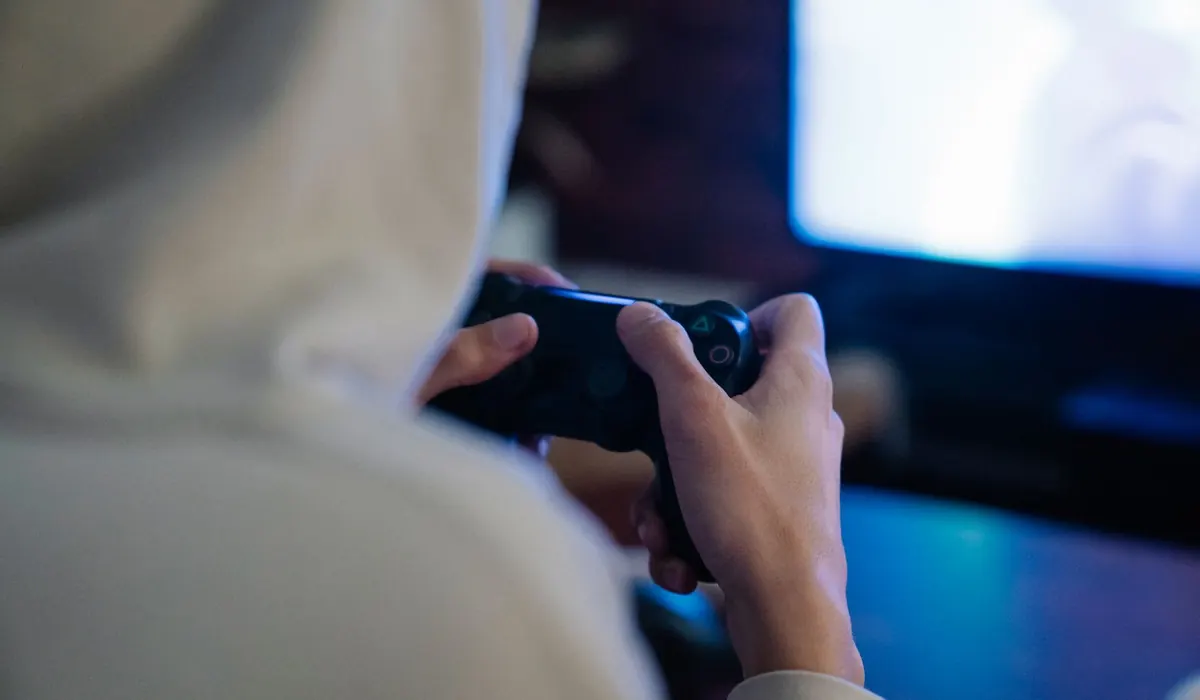
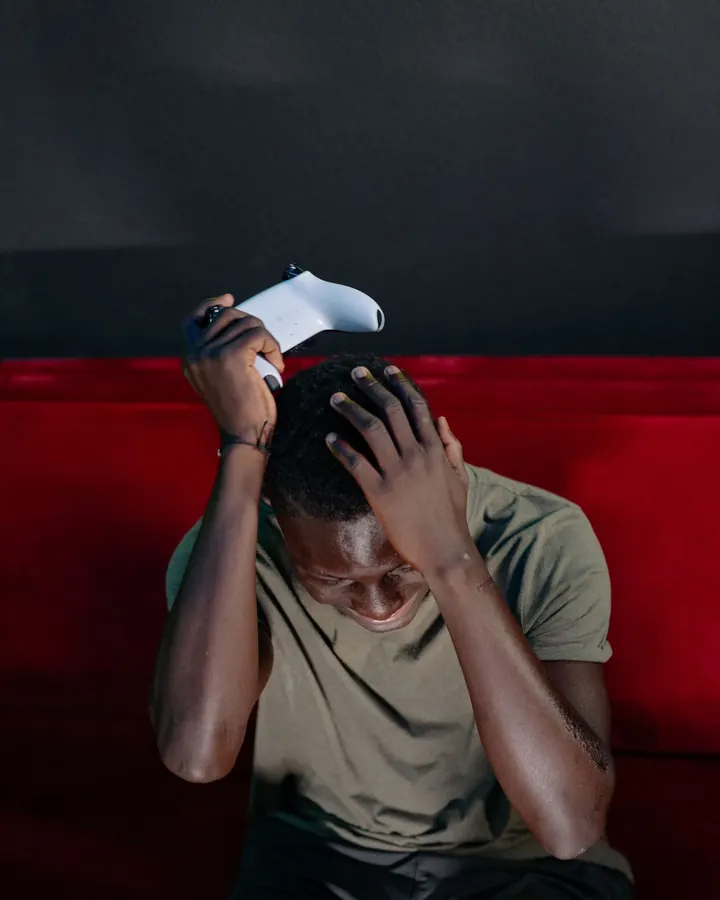

A note for parents: our retreats are for adults, 18 and over. If your child is under 18, start with their doctor, a child and adolescent therapist or the school counselor; the free SAMHSA National Helpline (1-800-662-4357) can point to local services for young people. Many of the young adults who reach us, between 18 and 25, started exactly this way as teenagers.
What stopping feels like
Quitting gaming is not medically dangerous. There are no seizures and no physical withdrawal of the kind alcohol or opioids bring. But it is uncomfortable, and the discomfort is predictable. People describe irritability, restlessness, low mood, a strange heavy boredom, and a mind that keeps drifting back to the game.
| When | What most people feel |
|---|---|
| Days 1 to 3 | Restlessness and irritability. Reaching for the controller or the launcher out of habit. Evenings feel long and empty. |
| Week 1 to 2 | The hardest stretch for most people. Boredom that feels physical, low mood, poor sleep as the body adjusts to going to bed earlier, strong urges at the usual play times. |
| Weeks 3 to 6 | Urges come in waves rather than all day. Focus and energy start to return. Other activities begin to feel rewarding again, slowly. |
| Months after | The pull is weaker, but a stressful week, a breakup, a new release or an old friend's invite can bring it back fast. This is where most relapses happen. |
If quitting uncovers a depression that was there all along, or you have thoughts of ending your life, call or text 988 in the United States, or go to an emergency room. The low mood after quitting is real, and it is treatable.
What works without iboga
The treatment with the most evidence for problem gaming is cognitive behavioral therapy, which works on the thoughts and routines that keep you playing. For younger adults still living at home, family therapy helps, because gaming is often tangled up with conflict in the house. When ADHD, depression or anxiety are part of the picture, treating them properly makes quitting much more realistic. The free SAMHSA National Helpline (1-800-662-4357) can point to local mental health services.
Peer support exists too. Computer Gaming Addicts Anonymous (CGAA) runs 12-step meetings, many of them online, and Game Quitters offers a community and structured program for people who want to stop or cut back.
- Decide: limit or quit. Some people can return to a few planned hours a week. Many with a long history do better quitting fully for at least 90 days, then deciding. Be honest about which you are.
- Make it harder to start. Uninstall, log out, give the console to someone, move the PC out of the bedroom. Friction beats willpower.
- Turn off the hooks. If you keep playing, cut the daily streaks, battle passes and loot boxes. They are designed to keep you, not to entertain you.
- Fill the hours. The empty evening is the real enemy. Plan it: exercise, a class, a sport, cooking, people in the same room.
- Fix sleep first. Late-night sessions wreck sleep, and poor sleep makes everything else harder.
A word on the popular "dopamine detox." Taking a break from screens and quick rewards is a useful idea, and many people benefit. But the claim that you are "resetting your dopamine" in a set number of days is pop science, not physiology. What helps is the break itself and what you build in its place.
Questions people ask
Why is it so hard to quit gaming?
Because games deliver frequent, reliable rewards, and many are designed with streaks, battle passes and random drops to keep you coming back. They also meet real needs: friendship, achievement, escape from stress. Quitting removes all of that at once, so the plan has to replace those needs, not only remove the game.
What are signs of addiction to video games?
Playing longer than you meant to, again and again; failed attempts to cut back; gaming pushing aside sleep, work, school, meals and people; irritability when you cannot play; lying about how much you play; and continuing even after it has cost you a job, a grade or a relationship. The WHO looks for loss of control, priority over other activities and continuing despite harm, usually over about a year.
How many hours a day is a video game addiction?
There is no number. Neither the WHO nor the DSM-5 defines addiction by hours. Someone playing six hours on a Saturday with friends may be fine; someone playing two hours who cannot stop, skips work and feels terrible about it may not be. Look at control and harm, not the clock.
Is 4 hours of gaming a day too much?
For most adults with a job, sleep needs and people in their life, four hours every day is a lot, and it is worth asking what it is crowding out. Whether it is a disorder depends on whether you can stop when you choose and whether it is causing harm.
Is 2 hours of gaming a day too much?
For many people, two hours a day is a hobby, like any other. It becomes a problem if those two hours keep turning into five, if you play to escape feelings you never deal with, or if sleep, work and relationships suffer.
What are the withdrawal symptoms of video game addiction?
Irritability, restlessness, low mood, intense boredom, trouble sleeping and frequent urges to play, strongest in the first one to two weeks. It is not medically dangerous, but if quitting reveals depression or thoughts of self-harm, get help: 988 in the United States.
How can I overcome video game addiction?
Add friction (uninstall, move the devices), plan what fills the evenings, fix your sleep, and tell people. Cognitive behavioral therapy has the best evidence, and treating ADHD, depression or anxiety alongside makes a big difference. Peer groups such as CGAA and Game Quitters help many people stay on track.
Is it a good idea to quit gaming?
If gaming is costing you sleep, work, health or relationships and you cannot control it, yes, at least for a period. Many people quit fully for 90 days, then decide with a clear head whether moderate play is possible for them. If gaming is a hobby you control, there is no need to quit.
Is there a 12-step program for gaming addiction?
Yes. Computer Gaming Addicts Anonymous (CGAA) follows the 12 steps and holds meetings in person and online. Game Quitters is a different, non-12-step option with an online community and a structured program.
Is there a self-test for gaming addiction?
Yes. Short questionnaires based on the DSM-5's nine proposed criteria for Internet gaming disorder are widely used; the DSM-5 suggests five or more over twelve months. If you score high, talk to a therapist or doctor.
Does iboga work for video game addiction?
There is no research on iboga for gaming. We offer the retreat to gaming guests as a psycho-spiritual reset and a chance to look at what the game was holding, not as a proven treatment. It is a strong opening, not a cure, and it works best with therapy and a real plan at home.
Keep reading
 Mind and bodyIboga for depression and anxietyWhat the night does, what the evidence shows, and who should wait.4 min read
 BehaviorsHow to stop gamblingSports betting, chasing losses, what works, and what a ceremony can add.15 min read
 BehaviorsHow to quit pornCompulsive sexual behavior, OnlyFans spending, what works, and an honest word on iboga.18 min read
 The programSafety and medical protocolThe risks, the screening, what happens around your mat, and who we decline.11 min read
 The programPreparation and continuing careHow to prepare body, mind and soul, and how to integrate afterwards.9 min read
Addiction guides
 The programRehab, ibogaine clinic or Bwiti Life?What each approach treats in the body, the emotions and the spirit.12 min read
 SubstancesIboga for alcohol addictionThe taper first, what the ceremony does, and the months after.4 min read
 SubstancesHow to quit opioids and fentanylIboga's best-evidenced use: withdrawal, the research, tolerance and overdose risk.13 min read
 SubstancesHow to quit cocaineThe crash, the craving, the heart first, and what the research shows.11 min read
 SubstancesHow to quit kratom and 7-OHOpioid-type withdrawal, tapering, and the cautions to know before iboga.10 min read
 SubstancesHow to get off Xanax and benzosWhy the taper comes first, and what iboga can offer after it.13 min read
 SubstancesHow to get off AdderallPrescription stimulants, the crash, ADHD after stopping, and the need to perform.13 min read
 SubstancesHow to quit ketamineDependence, the bladder, the low weeks, and coming back to yourself.10 min read
 SubstancesHow to quit weedCannabis withdrawal day by day, what works, and what the ceremony adds.13 min read
 SubstancesHow to quit smokingCigarettes, vapes and pouches: nicotine, the evidence, and the breath behind it.10 min read
 SubstancesChemsex recoveryTina, G and mephedrone, GHB withdrawal, and finding sober intimacy again.15 min read
- BehaviorsHow to stop gamblingSports betting, chasing losses, what works, and what a ceremony can add.15 min read
- BehaviorsHow to quit pornCompulsive sexual behavior, OnlyFans spending, what works, and an honest word on iboga.18 min read
 BehaviorsHow to quit social mediaEndless scrolling, TikTok and Instagram, what works, and an honest word on iboga.14 min read
 BehaviorsHow to stop compulsive shoppingCompulsive buying, buy now pay later, help with debt, and an honest word on iboga.14 min read
 BehaviorsHow to stop binge eatingBinge eating disorder, food addiction, what works, and an honest word on iboga.14 min read
 BehaviorsHow to stop love addictionCodependency, anxious attachment, letting go, and an honest word on iboga.14 min read