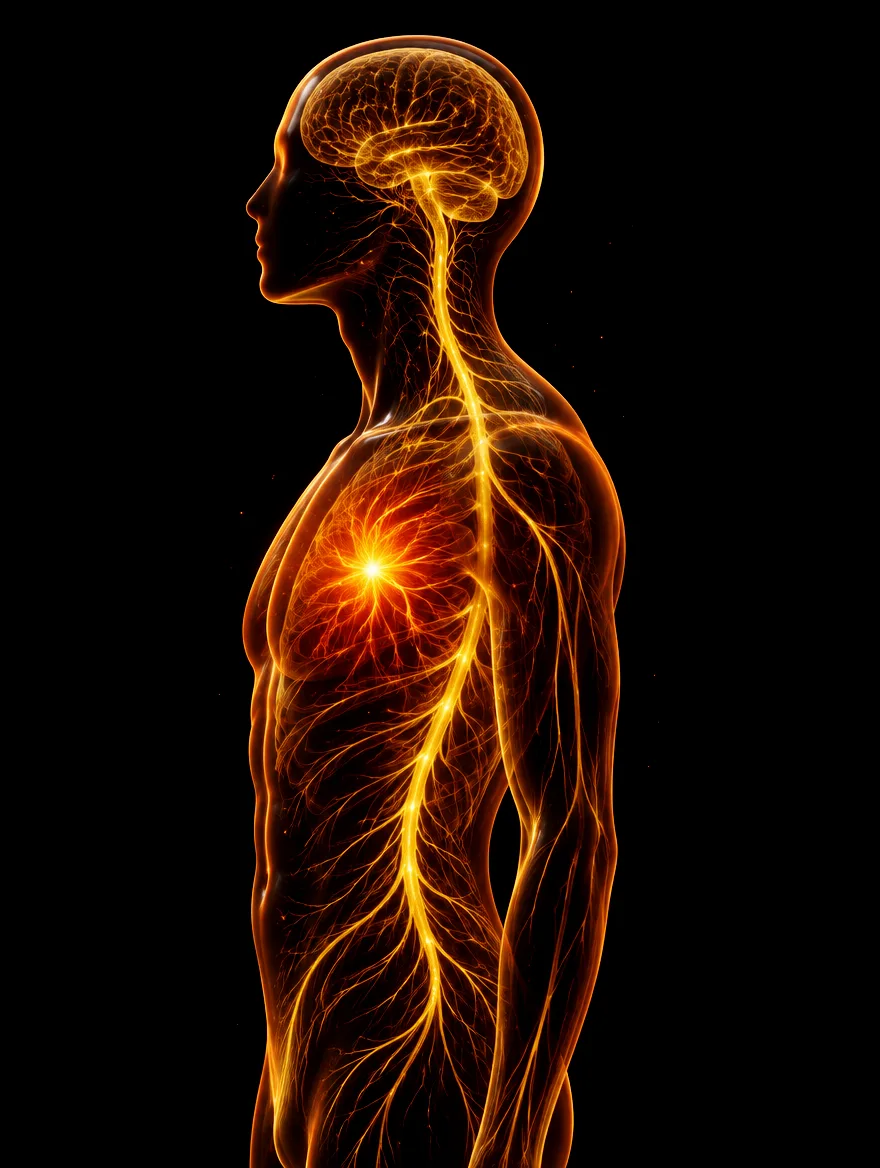
PTSD and trauma
Post-traumatic stress is not a memory problem; it is a body that never got the message that it is over. Iboga produces a long, lucid review of the past with a distance that therapy works years to build, inside a medical frame and a tradition that knows how to hold it.
Free guide · PDF
Standing Down
PTSD: the ceremony, the numbers, the research and how to prepare.
Why iboga for trauma
Trauma memories are stored as if they were still happening. Guests consistently describe the iboga night as watching those events from a distance, as an observer, often for the first time. The psychologist calls it reconsolidation; the tradition calls it being shown. The days after are for deciding what to do with what was seen.
Sleep, heart-rate variability and resting heart rate are measured before and after. Most guests sleep deeply on the processing day for the first time in years, and the measurements follow.
Iboga does not force you back into the event. It shows it with distance, in sequence, with the people and the reasons around it. The practitioner guides the review the next day.
The 2024 Nature Medicine study on thirty special operations veterans found large reductions in PTSD, depression and anxiety one month after supervised ibogaine treatment, with no serious cardiac events. Open-label, no placebo group, and the strongest signal published so far. Every participant had a traumatic brain injury. See How iboga works.
Iboga is not an approved treatment for PTSD, and we never promise a cure. It does not replace trauma therapy, your doctor or a medicine that is working for you. What we can promise is careful screening, a team beside you all night, and honesty about what is known and what is not.
What it is
Post-traumatic stress disorder can follow combat, an assault, an accident, a disaster, abuse, or a sudden death you witnessed. It is not weakness, and it is not a failure to move on. It is a nervous system that learned, at the worst moment of your life, that the world is dangerous, and has not yet unlearned it.
Doctors look for four groups of signs that last more than a month and get in the way of life. You do not need a diagnosis to talk to us. Many of the guests we see for trauma never had one.
Flashbacks, nightmares, images that arrive uninvited. A smell, a sound or a date that drops you back into the moment, with the heart and the body reacting as if it were happening now.
Steering clear of places, people, conversations and news that remind you. Keeping busy so there is no quiet. Using alcohol, cannabis or pills to switch off at night.
Guilt, shame or anger that will not settle. Feeling cut off from people you love. Numbness where joy used to be. Beliefs such as "it was my fault" or "no one can be trusted".
Sitting with your back to the wall. Startling at small noises. Poor sleep, a short fuse, trouble focusing. Scanning every room for the exits.
The U.S. National Center for PTSD estimates that about 6 in 100 adults will have PTSD at some point in their lives, and about 5 in 100 in any given year. In 2020, that was about 13 million Americans.
Over a lifetime, about 8 in 100 women and 4 in 100 men develop PTSD. Veterans are more likely than civilians to have it, and those deployed to a war zone more likely still. Read our page for veterans.
Why it keeps going
After a trauma, the brain's alarm system is set to go off early and loudly. A reminder arrives, sometimes so small you do not notice it. The alarm fires: the heart races, the body braces, the old scene is suddenly close. To make it stop, you avoid, or you go numb. That works for an hour or a night. But every time you avoid, the brain learns once more that the danger is real, and it stays on guard for the next reminder.
That is why trauma can stay fresh for decades while ordinary memories fade. The memory was never put away as something that is over. Trauma-focused therapies work by helping the brain look at it safely, long enough to file it as the past.
Guests often describe the iboga night as doing something similar from a different angle: watching the events from outside, calmly, as an observer, often for the first time. We do not claim that as a medical mechanism. The days and months after are for helping that new view hold.
How it works
The same loop, every day.
A reminder, the alarm, avoid or go numb, on guard.
In the ceremony, many guests describe stepping outside the loop and seeing where it began.
Therapy and three months of follow-up help the new path hold.
Integration calls, new habits, support at home.
The research, with its limits
No placebo-controlled trial has tested iboga or ibogaine for PTSD. Two studies of U.S. special operations veterans are the most cited. Both are encouraging. Both have real limits, and we want you to know them before you decide.
Thirty male special operations veterans, all with a traumatic brain injury, received ibogaine with magnesium under medical supervision in Mexico, and were assessed at Stanford before and after. One month later, PTSD scores had fallen by 88% on average. Disability scores went from mild-to-moderate, on average, to none. The share reporting thoughts of suicide fell from 47% to 7%. There were no unexpected or serious adverse events, and no heart rhythm problems were seen on monitoring.
Fifty-one special operations veterans who had been through a program in Mexico rated, looking back, how they felt the month before and the month after. Among those who answered the PTSD questions, the average score fell from 46 to 12, on a scale that runs from 0 to 80. That program used ibogaine and also 5-MeO-DMT, a different psychedelic, so the change cannot be put down to ibogaine alone.
Neither study compared against a placebo or another treatment. Hope, rest, a new setting, the company of other veterans and the care around the night can all explain part of the change.
Both used purified ibogaine in a clinic. We work with the whole iboga root bark in a Missoko Bwiti ceremony, under our physician's limits. Related, not the same. See iboga vs ibogaine.
Mostly white male veterans, followed for about a month. Nobody knows yet how results carry over to survivors of assault, first responders or people with childhood trauma, or how long they last.
In the Stanford study, 40% of participants were treated for headache and 23% for nausea during the night, and all had a brief unsteadiness and tremor that passed within a day. The authors call for controlled trials themselves. More on how iboga works and reading success rates honestly.
Who holds it
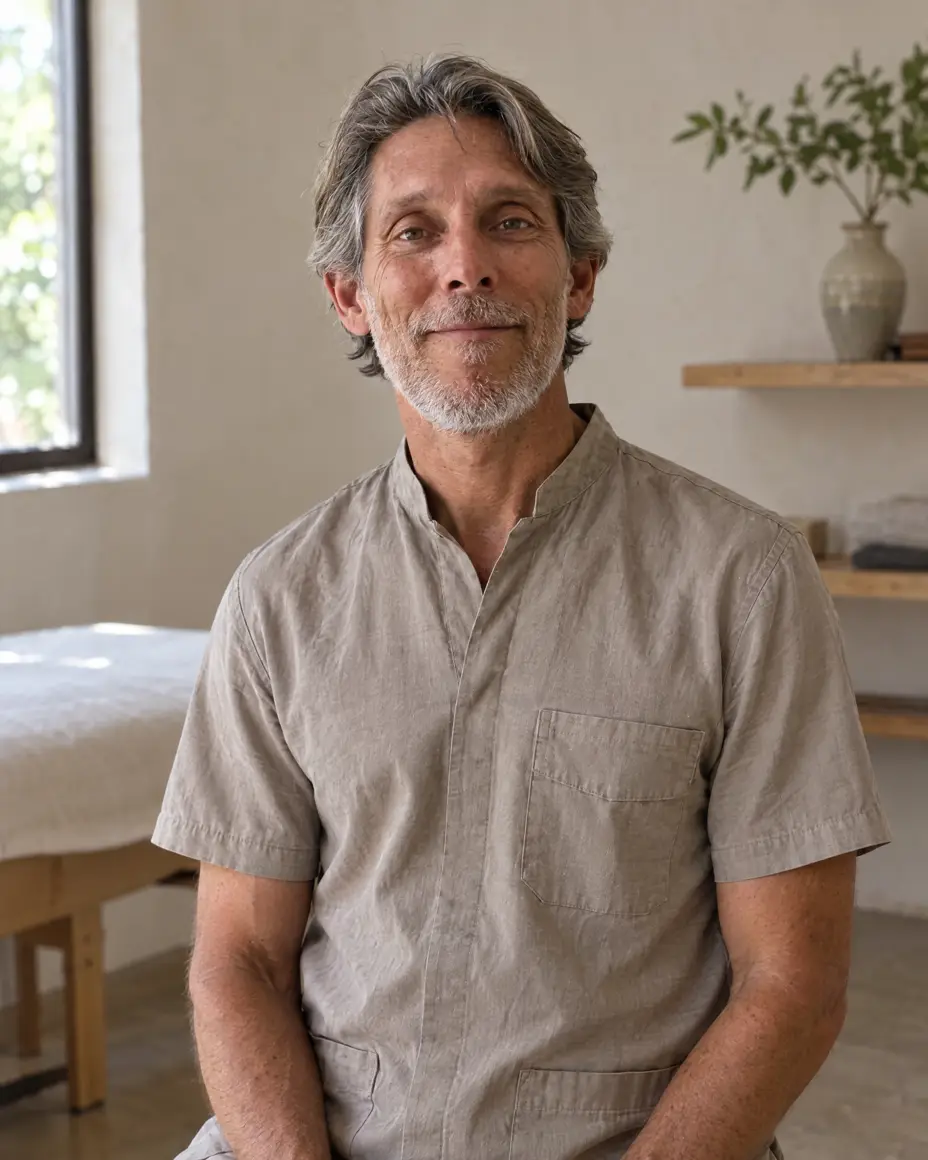
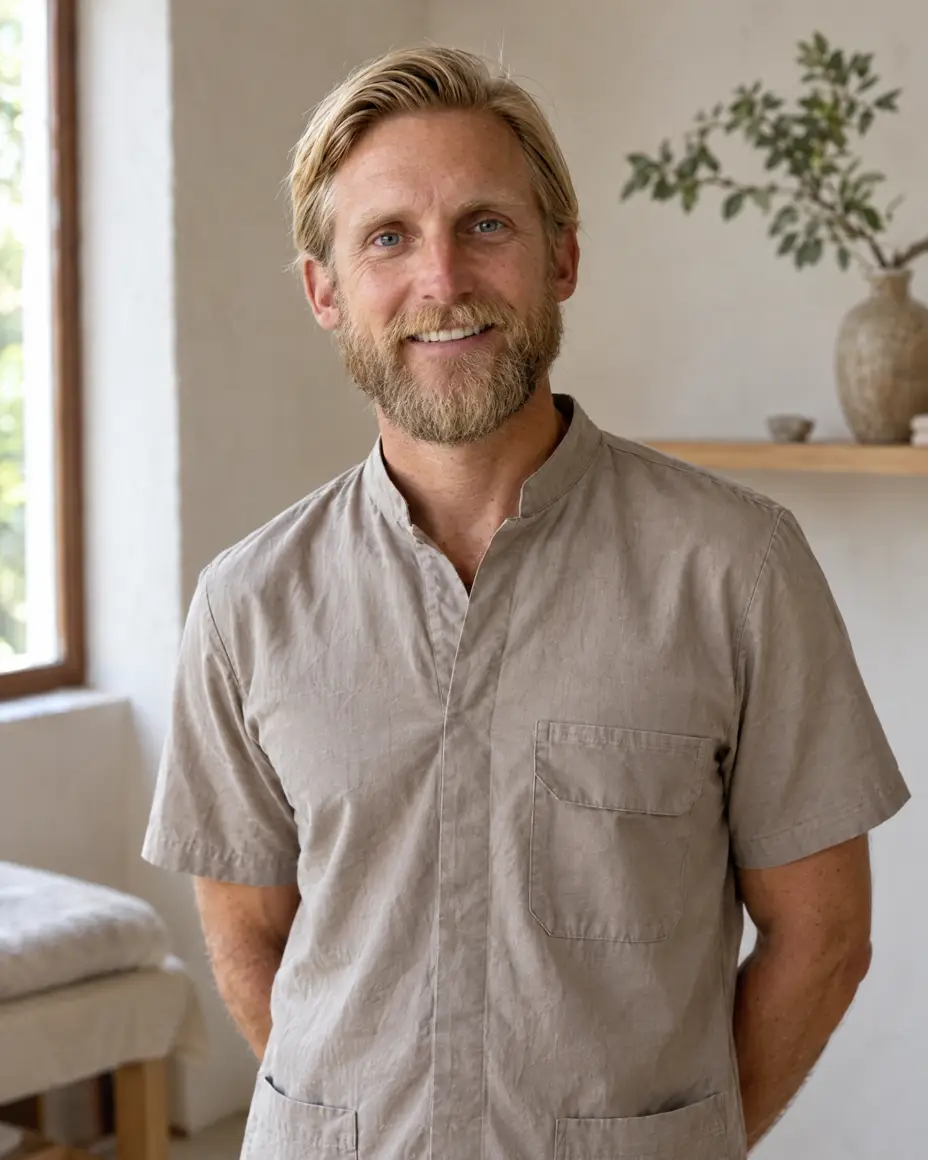
Michael and Cory open and hold the ceremony; Tania, our psychologist with close to a decade at Mexico's National Institute of Psychiatry, screens for what iboga cannot hold and carries the integration; Dr Villarreal keeps the body safe.


Who it is for
PTSD or complex trauma with or without a diagnosis, moral injury, childhood trauma, first responders and veterans, survivors of violence or loss. Willing to be honest in screening and to do the work after.
Active psychosis or recent mania, an unstable eating disorder, acute suicidality, a medication that cannot be tapered in time, pregnancy, or a heart condition. The psychologist and the physician decide together, and sometimes the answer is a later date.
What works without iboga
PTSD is treatable, and many people recover with care that is available at home. If you have not tried a trauma-focused therapy yet, we will usually suggest you do, before or alongside a retreat.
The 2023 VA and Department of Defense guideline recommends trauma-focused psychotherapy as the first-line treatment for PTSD, ahead of medicines. Look for a therapist trained in cognitive processing therapy (CPT), prolonged exposure (PE) or EMDR.
The same guideline names sertraline, paroxetine and venlafaxine as the medicines with the best evidence for PTSD. Benzodiazepines are recommended against: they have not been shown to help PTSD, and they carry real risks.
Prazosin is suggested for nightmares, not for PTSD as a whole. In a 2018 VA trial of 304 veterans with chronic PTSD, it did no better than placebo for nightmares or sleep after ten weeks. It still helps some people, and it matters for planning, because it lowers blood pressure.
The U.S. National Center for PTSD (ptsd.va.gov) has free information, a treatment decision aid and self-help apps. Childhood or repeated trauma? Read iboga for complex trauma.
Your stay
Most guests arrive three to six weeks after their first message. Here is a seven-day retreat with two ceremonies. Ten and fourteen days follow the same rhythm with more room between the nights. Nothing is rushed, and nothing happens without being explained first.
A discovery call, a health form, an ECG and bloodwork near home. Dr Villarreal reviews every medicine. Tania asks about your trauma history only as far as you are ready to share, about dissociation, and about sleep, alcohol and safety at home.
We meet you at Cancún airport. Intake with the physician, vitals, your room, and the first fire talk in the evening. You choose your own spot in the room. Nothing is given on day one.
The root is given in steps, the practitioner watching you before giving more, the physician in the room with cardiac monitoring. Guests describe a long review of the past, seen from a distance. Someone stays beside you all night, and the lights and music are explained before they start.
A quiet day, mostly in bed, with the team checking on you. Walking is unsteady for a while. Many guests say they slept more deeply than they had in years.
The cenote, the garden, and a conversation with the practitioner about what the night showed. Tania helps you put it into words and decide what to do with it.
Often quieter and more personal. Then another processing day and integration day.
A closing fire, a plan for the first weeks at home, and a summary for your therapist if you want one. We drive you back to the airport.
Integration calls, the psychologist and the physician reachable, and your follow-up measures compared with where you started.
Veterans and first responders can also choose one of our dedicated dates. See the ceremony and the medical protocol.
Preparation and medicine safety
People with PTSD often take several medicines at once: one for mood, one for nightmares, one to sleep, sometimes one for anxiety. Each one matters with iboga, which affects the heart's rhythm, acts on the serotonin system and is broken down by the same liver enzymes. Our physician reviews them all with you and, with your consent, with the doctor who prescribed them.
Never stop or change a medicine on your own. Stopping an antidepressant suddenly can bring back symptoms and cause withdrawal effects, and stopping a benzodiazepine too fast can cause seizures. Every change is planned with your prescribing doctor and our physician, sometimes weeks before you travel.
Sertraline, paroxetine, fluoxetine, venlafaxine and others. Ibogaine acts on the same serotonin transporter, so together they raise the risk of serotonin syndrome, and some also lengthen the QT interval. Most need a taper planned in advance.
Both block CYP2D6, the enzyme that breaks down ibogaine. In healthy volunteers who took paroxetine for six days, exposure to ibogaine and its metabolite was about twice as high. The timing of the taper matters as much as the taper.
It lowers blood pressure, especially when you stand up, and iboga makes walking unsteady for a day or two. The physician decides whether it is paused or adjusted, and the team plans how you rest and move.
Alprazolam, clonazepam, lorazepam, diazepam. The FDA warns that stopping them suddenly can cause life-threatening withdrawal, including seizures. If you take one daily, tell us early and read iboga and benzodiazepines.
Trazodone, zolpidem, mirtazapine, sedating antihistamines, melatonin, cannabis at night. Some sedate, some act on serotonin. Put every one on the health form, even the ones you take only sometimes.
Quetiapine and similar medicines, sometimes given for sleep or agitation, can lengthen the QT interval. So can some antibiotics and anti-nausea medicines. Read how we protect your heart.
Losing time, feeling unreal, or watching yourself from outside. It is common after trauma and not a reason to hide anything. The psychologist screens for it. If it is frequent and not yet stable, stabilizing it at home comes first.
Many people with PTSD drink or use to sleep. Say so honestly. Alcohol withdrawal and recent opioid use both change the medical plan.
Blasts, concussions, seizures. Upload any reports. See iboga and traumatic brain injury.
If you are thinking about ending your life, please reach out now. In the United States or Canada, call or text 988, at any hour. Veterans can dial 988 and press 1, or text 838255. Survivors of sexual violence can call RAINN at 800-656-HOPE (4673). If you are in danger, call 911. A retreat can wait.
Thoughts of suicide in the last weeks, or a recent attempt, mean a later date with us, and support at home first. These requests help us prepare; they are not medical advice. The physician's review decides what is safe for you. More on safety.
For the family
Partners, parents and children of people with PTSD carry a lot: the anger that comes out of nowhere, the nights, the distance, walking on eggshells. Often it is a wife or a husband who first finds us. You are welcome on the call, in the planning and in the follow-up. The decision to come stays with the person who carries the trauma, and the medical review is the same for everyone.
You do not need the details of what happened to help. Steady routines, patience with the startle and the silence, and not taking the distance personally go a long way. Look after yourself too. If you are ever worried about suicide, ask directly, and call or text 988 together. Veterans and their families can dial 988 and press 1.
Ask about safety, medicines and what the night is like. Book a discovery call.
The medication list, the ECG and any brain injury reports.
A quiet first week, no big decisions, and room to talk only when they want to.
After the retreat
Guests often describe the weeks after as calmer, with deeper sleep and fewer triggers. Others find that old memories keep surfacing for a while, now with more distance. Both are normal. Neither is the end of the work.
Integration calls with the team, the psychologist and the physician reachable between them. With your consent, we write to your trauma therapist so the work continues at home, often in CPT, PE or EMDR.
The plan is plain on purpose: regular sleep, daily movement, time outside, and less alcohol and cannabis to switch off. Your follow-up measures are compared with where you started.
Before you leave, you write down your early warning signs, who to call and what helps. An anniversary, a news story or a loss can stir things up. Call us early. A hard week does not mean the work failed.
Any medicine you tapered is not restarted, changed or stopped without your prescribing doctor. If thoughts of suicide return, call or text 988 first, then us. After the three months, alumni calls are available if you want them. See online care.
Dates
Open retreats and the dedicated veterans' dates. Eight guests each; full list on the schedule.
We look forward to welcoming you, as you are. Thank you for trusting us with your healing.
Pricing, US dollars
All inclusive from Cancún airport: screening, ceremonies, room, meals, three months of follow-up. Apart from the deposit refunded when we cannot clear you, payments are final, see the terms. Full pricing.
Questions about trauma
Guests describe seeing it with distance rather than reliving it: the observer's seat, not the victim's. It can still be intense, which is why the practitioner and the team are beside you all night and the psychologist works with it after.
Usually with a taper planned in advance with your prescribing doctor and our physician; some medications need weeks. Do not stop anything on your own. Tell us on the discovery call.
Different medicine, different mechanism, similar territory. MDMA lowers fear in a therapy session; iboga produces a long review of the past inside a ceremony. See Iboga vs psilocybin, ketamine and MDMA.
The screening looks for this, the practitioner paces the doses, and a person stays beside you through the night. You can stop at any time.
Yes, with your consent: a summary for your therapist, and integration calls that can include them if you want.
No one can promise that, and we will not. Iboga is not an approved treatment. In the 2024 Stanford study of 30 veterans with brain injuries, PTSD scores fell by 88% on average one month after ibogaine, without a placebo group. It is a reason for hope and for more research, not a guarantee.
Only as much as you choose. The screening needs to know about your safety, your medicines and dissociation, not every detail. Many guests share more after the night than before it, and that is up to them.
Declare it, with the dose and when you take it. Because it lowers blood pressure, our physician decides with you and your prescriber whether it is paused or adjusted around the ceremony. Do not change it on your own.
Not by itself: every participant in the Stanford study had one. A history of seizures needs a careful look, so upload your reports. Read iboga and traumatic brain injury and our page for veterans.
Hard moments can come. Most guests describe watching, not reliving, but we plan for both. Someone stays beside you, you can open your eyes, sit up with help, or ask for a pause in the medicine at any time. The practitioner and the physician are in the room all night.
Often yes, with honesty and a plan. Daily heavy drinking can mean withdrawal, which is dangerous and changes the medical plan. Tell us how much and how often, and the physician will say what needs to happen first.
Sources

You've carried this long enough. Start with a conversation with our medical team.